CONTACT CBA ABOUT A BEE SWARM/REMOVAL
Many CBA members have experience in removing bees from your home, business or garden. Contact us preferably in the spring or summer to give the bees a chance to survive the winter after we have removed the colony.
Most beekeepers charge for bee removal service because of the time, resources and skill needed to remove bees. Caprock Beekeepers Association is a Non-profit organization which does not receive any proceeds for referral or removal by the individual beekeepers.
CBA does not endorse individual beekeepers for removal services however we disseminate removal information as a community service for the West Texas Caprock region. CBA cannot guarantee you will be contacted by a beekeeper or that a removal will be conducted.
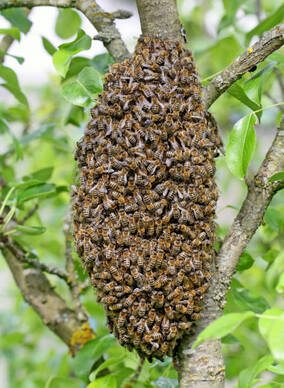
A swarm of bees are typically docile and only resting on a leg of their trip to their new home. They may hang around for an hour to a couple of days. They will typically move on without issue.
|
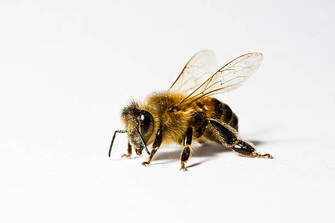
The Honey BeeIs this the insect you see?
This is a honey bee. As beekeepers we are focused on honey bees. |
|
If we get a call about these insects, we will explain that these are not honeybees and you may need to seek other services.
|


Swarms and What the Public Needs to Know |
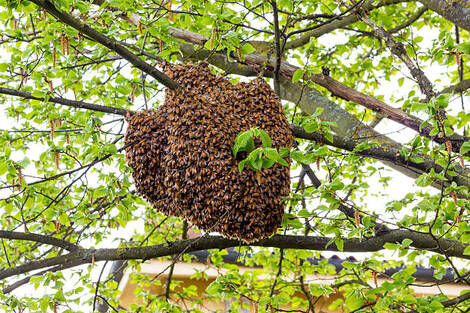
Although swarms normally occur during the spring months of April and May in Texas, they could happen in other months as well. Beekeepers do their best to prevent their own colonies from swarming throughout the year. |
|
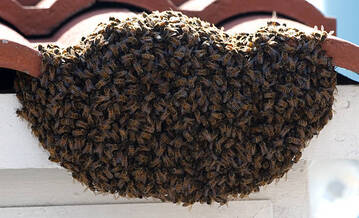
It's a swarm!!!
Swarms can be docile from gorging on honey before their relocation. Typically, swarming honeybees have no hive or young to protect so they have no interest in you. This will depend on what "leg" of the journey they are on.
Swarms start their journey with a pit stop 25-100 yards from their original colony and soon move on to a new home located by their scout bees. If the hive has a longer journey than expected, they might get a bit hangry as their honey stores deplete.
Swarms can be docile from gorging on honey before their relocation. Typically, swarming honeybees have no hive or young to protect so they have no interest in you. This will depend on what "leg" of the journey they are on.
Swarms start their journey with a pit stop 25-100 yards from their original colony and soon move on to a new home located by their scout bees. If the hive has a longer journey than expected, they might get a bit hangry as their honey stores deplete.
|
Details a beekeeper needs from you:
|
|
Who do you call if you see a swarm?
Click this link to open a new page to send CBA details about bees you need removed!
You can also visit the Texas Apiary Inspection Service
under Bee Removal to locate a
beekeeper in your county.
under Bee Removal to locate a
beekeeper in your county.